Ele’s Place
Capital Steel & wire is proud to be a sponsor of Ele’s Place in Lansing, Michigan, a center for grieving children and teens. To learn more about Ele’s Place, visit their web site at http://www.elesplace.org/.
read More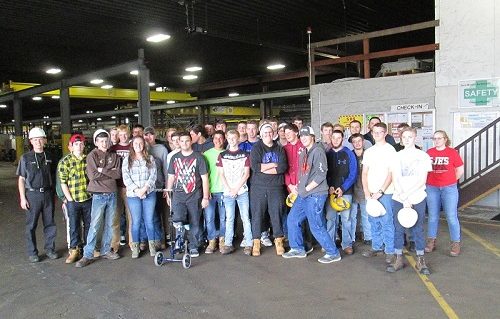
Manufacturing Day 2017
Capital Steel & Wire, Inc. was proud to be one of several local area hosts for the 2017 Manufacturing Day℠ on Friday October 6th, 2107. Area High Schools were able to bring students through the Capital Steel & Wire Mason, MI production facility to tour our Cold Drawing steel mill, Cold Saw department, Steel […]
read MoreIs Steel Magnetic? Other Steel & Metal Magnetic Questions Answered
Magnets have been around for thousands of years, helping ships navigate oceans. Today, magnets are used for a wide variety of purposes, including microwaves, televisions, generators, motors, speaker systems and much more. There is some misunderstanding about what types of materials are magnetic – particularly steel. Is steel magnetic, can it be magnetized, or neither? […]
read MoreCapital Steel & Wire Giving Back
Capital Steel & Wire, Inc donated $7,000 towards the arctic fox habitat expansion at Potter Park Zoo in Lansing, MI. If you would like to read the full story please click here.
read MoreEmployee Appreciation Luncheon
Capital Steel & Wire hosted our employee appreciation luncheon at our Mason, MI facility on Tuesday November 22nd. We can’t thank enough all the dedicated employees that work so hard for our customers every day!
read MoreEle’s Race
Capital Steel & Wire was again a proud sponsor of the 2016 Ele’s Race. Ele’s Place is a healing center for grieving children and teens. Four branch locations support families throughout the Ann Arbor, Grand Rapids, Flint and Lansing areas and beyond. You can help support them at http://www.elesplace.org/.
read MoreBet You Didn’t Know
Our President Kelly Preston appeared on Mid Michigan local radio shows to give a little public service announcement about Capital Steel & Wire. You can listen to it here.
read More2016 CAMC Workforce Professional of the Year Award
Our very own Jill Roragen was presented with the 2016 CAMC Workforce Professional of the Year Award at the annual CAMC dinner this past Thursday. We are very proud and lucky to have her as a part of our team! Pictured Above: Kelly Preston (Left) Jill Roragen (Right) Pictured Above: Fred Render (Left) […]
read MoreManufacturing Day at Capital Steel & Wire
Capital Steel & Wire proudly hosted Manufacturing day at our Mason facility. Our very own Fred Render was interviewed by WKAR, you can listen to the interview by clicking here.
read MoreCapital Steel & Wire Proudly Sponsors
At Capital Steel & Wire we like to get involved in our local community and help put on special events. Captial Steel & Wire proudly sponsors: Ele’s Race Dewitt Classic Car Cruise In Dewitt Santa Race Dewitt Public High School Sports Along with sponsorships Captial Steel & Wire also does volunteer work for the Dewitt […]
read More